

BOLO: The Wildest Things We're Finding in Brand-New Homes Right Now

Just because a home is brand new doesn't mean it's problem-free.
If you're buying new construction, here's your reminder: Someone built it. Someone supervised it. Someone missed things.
Our inspectors have been seeing an unusual number of issues in brand-new homes recently. Most aren't things a buyer would ever notice during a walkthrough - but they can become expensive repairs, warranty headaches, or even safety concerns later.
Here's a look at a few real examples from recent inspections.
BOLO #1: Hot Electrical Connections (That's Why We Thermal Image Every Panel)

During every inspection, we use a professional FLIR thermal camera to scan the electrical panel while it's under load. The camera allows us to detect components that are operating at abnormal temperatures - something that's completely invisible to the naked eye.
An overheated breaker or electrical connection may indicate:
Loose electrical terminations
Improperly installed breakers
Overloaded circuits
Failing electrical components
Manufacturing defects
These issues often develop heat long before they show visible damage. Finding them early allows repairs before they become larger problems or in some cases, fire hazards.
This is one of the many examples where specialized equipment helps us identify defects that simply can't be seen during a basic walkthrough.
BOLO #2: Damaged Roof Truss Mending Plates

This little metal plate may not look important.
It absolutely is.
These are engineered truss connector plates - often called mending plates - that hold roof truss members together. They are hydraulically pressed into the lumber during manufacturing and are a critical structural component of the roof system.
In this home, the plate had become partially detached and bent.
While one damaged connector doesn't necessarily mean the roof is unsafe, damaged truss connections should always be evaluated and repaired according to the truss manufacturer's specifications or by a qualified contractor.
This is the kind of defect that's almost impossible to notice unless someone is actually crawling through the attic.
BOLO #3: The "Creative" Insulation Measurement
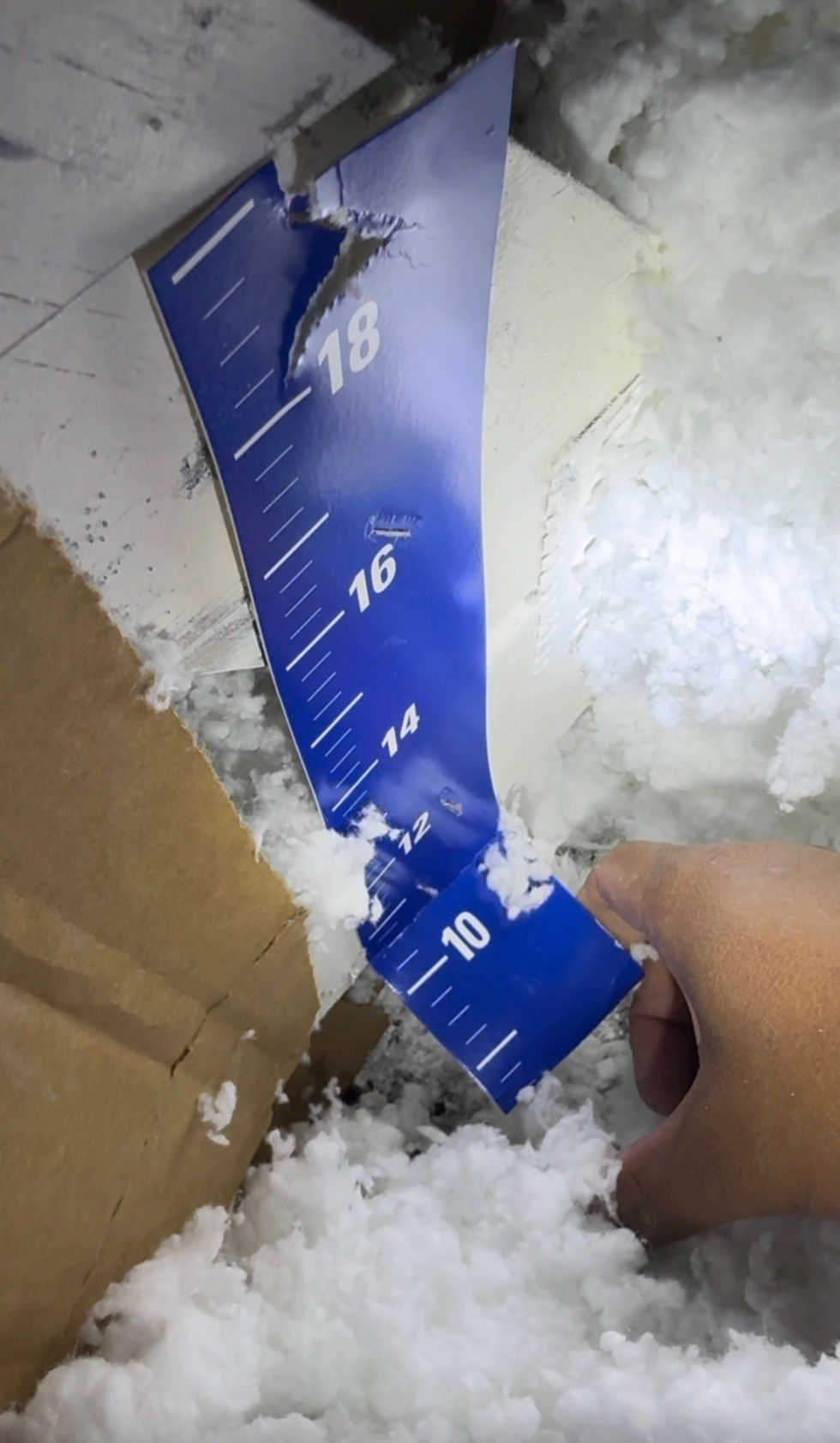
We'll admit...
This one actually made us laugh.
Someone folded the insulation measuring ruler over before installing it. Why?
Because it made the insulation appear much deeper than it actually was.
Once unfolded, it became obvious the attic insulation was significantly below the marked depth.
Adequate attic insulation isn't just about comfort.
It affects:
Energy efficiency
Heating and cooling costs
Indoor comfort
Builder warranty requirements
Overall home performance
Whether this happened intentionally or accidentally, it demonstrates why independent verification matters.
BOLO #4: "Mold-Like" Growth in Brand-New Attics
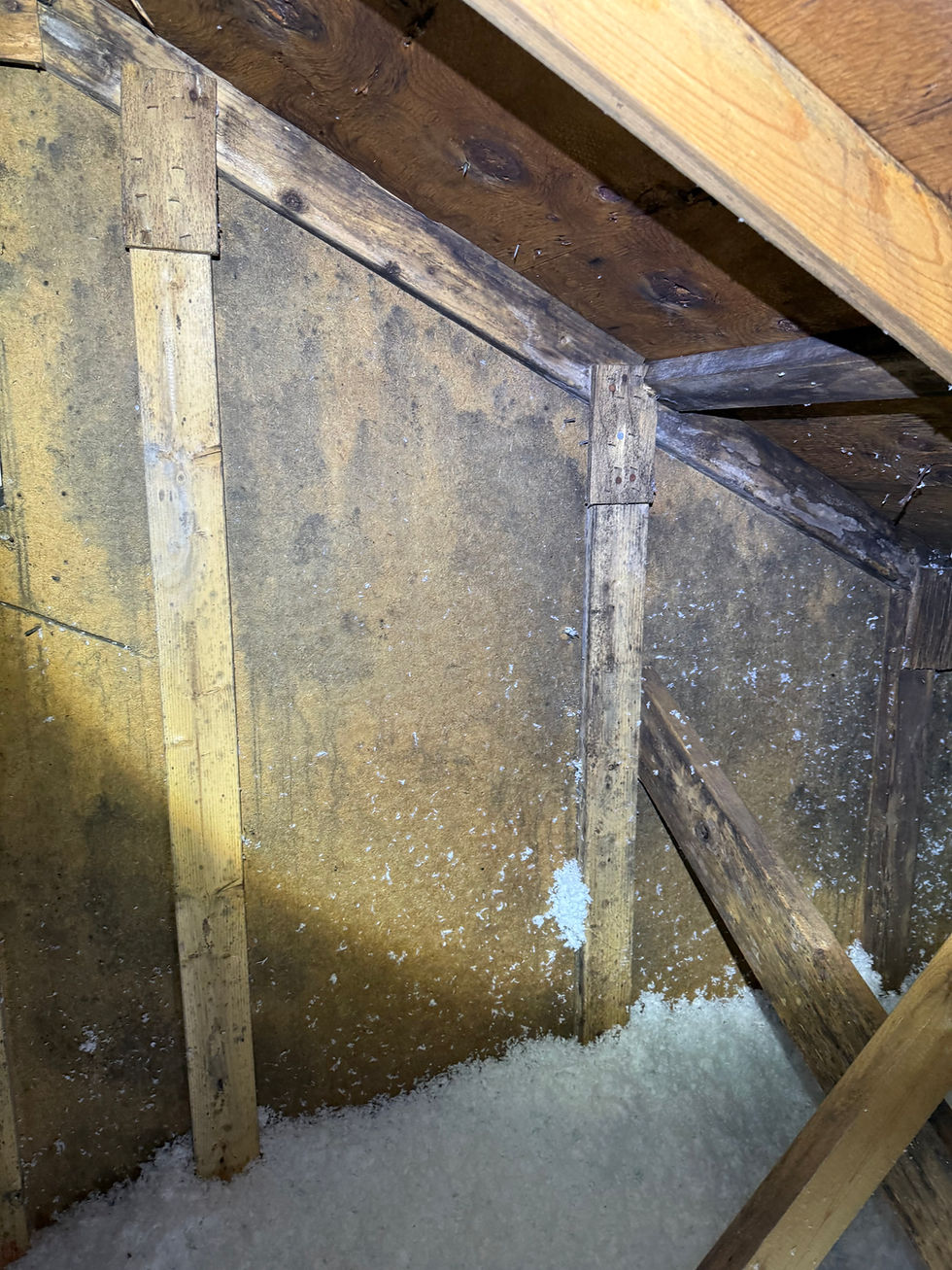
We're finding this far more often than we expected this summer.
Dark staining or mold-like growth on roof sheathing is appearing in a surprising number of new homes.
While laboratory testing is required to determine exactly what the material is, conditions commonly associated with this type of growth include:
Elevated attic humidity
Construction moisture that never fully dried
Poor ventilation
High summer temperatures
Condensation
Many buyers assume a brand-new house couldn't possibly have moisture issues.
Unfortunately, new construction often contains a tremendous amount of moisture from fresh lumber, concrete, drywall mud, paint, and other building materials. If that moisture isn't able to escape properly, microbial growth can begin surprisingly quickly.
It's another reminder that "new" doesn't automatically mean "perfect."
BOLO #5: Collapsed Sewer Lines in Brand-New Homes

This may be one of the most surprising defects we find, and definitely the most expensive.
Many buyers assume a brand-new sewer line couldn't possibly have problems - but we've discovered collapsed PVC sewer pipes in homes that had never even been lived in.
How does that happen?
Heavy construction equipment driving over newly installed piping, improper backfilling, poor soil compaction, or installation damage can deform the pipe before the home is ever occupied. The line may still drain during a builder's test, but over time that damaged section can worsen, eventually causing slow drains, recurring backups, or complete sewer failure.
The most concerning part is that this defect is completely invisible from inside the home. Every sink, toilet, and shower may appear to function normally during a walkthrough.
That's why we recommend a sewer scope on every new construction home.
A 20 minute camera inspection can identify costly underground defects before closing - when the builder is still responsible for correcting them instead of the homeowner.
Why This Matters
A municipal building inspection is not the same thing as a comprehensive home inspection.
Building inspectors are tasked with verifying compliance with applicable building codes at specific stages of construction. They are not performing a detailed evaluation of every accessible component, nor are they working solely on behalf of the buyer.
A private home inspection is different.
We're looking for defects, installation issues, incomplete work, and maintenance concerns that could affect your investment - not just whether a minimum code requirement was met.
Many of the issues we identify are corrected by the builder before closing, saving our clients time, money, and frustration.
Your Final Walkthrough Isn't an Inspection
The final walkthrough is your opportunity to verify the home is complete.
Your inspection is your opportunity to verify it was built correctly. Those are two very different things.
BOLO Before You Close
Brand-new homes can be beautiful. They can also have hidden defects.
Before you sign the closing documents, have an independent inspection performed by someone working for you - not the builder.
Because peace of mind is a lot less expensive than unexpected repairs.


Comments